Replacements Built for Storm Exposure
Roof Replacements in the Dallas-Fort Worth region for insurance-covered storm damage and end-of-life roof failure
Seasonal hail and wind damage drives most roof replacement projects across the Dallas-Fort Worth area, where impact events compromise shingle integrity and material warranties no longer protect against leaks that develop after storm seasons pass. Master Roofing LLC replaces residential and commercial roofs in the Dallas-Forth Worth region, specializing in insurance-covered storm damage claims where documentation quality determines whether coverage approves at full replacement cost or denies based on adjuster arguments that existing damage resulted from wear rather than weather events. The replacement process includes attic inspection that reveals hidden deck deterioration and moisture damage extending beyond what exterior examination shows, providing the evidence depth necessary to support insurance claims when carriers challenge damage extent or causation.
Material selection affects both storm resistance for future hail seasons and warranty structure separating manufacturer defect coverage from installation labor protection. Shingle options range from standard three-tab composition to impact-rated architectural styles that qualify for insurance discounts in hail-prone regions, while metal roofing provides dent resistance with expansion joint considerations, and flat roof membranes vary in puncture resistance based on reinforcement layer thickness.
Schedule a roof assessment to review damage extent and material options suited to your property and budget.
What Changes After Replacement Completes
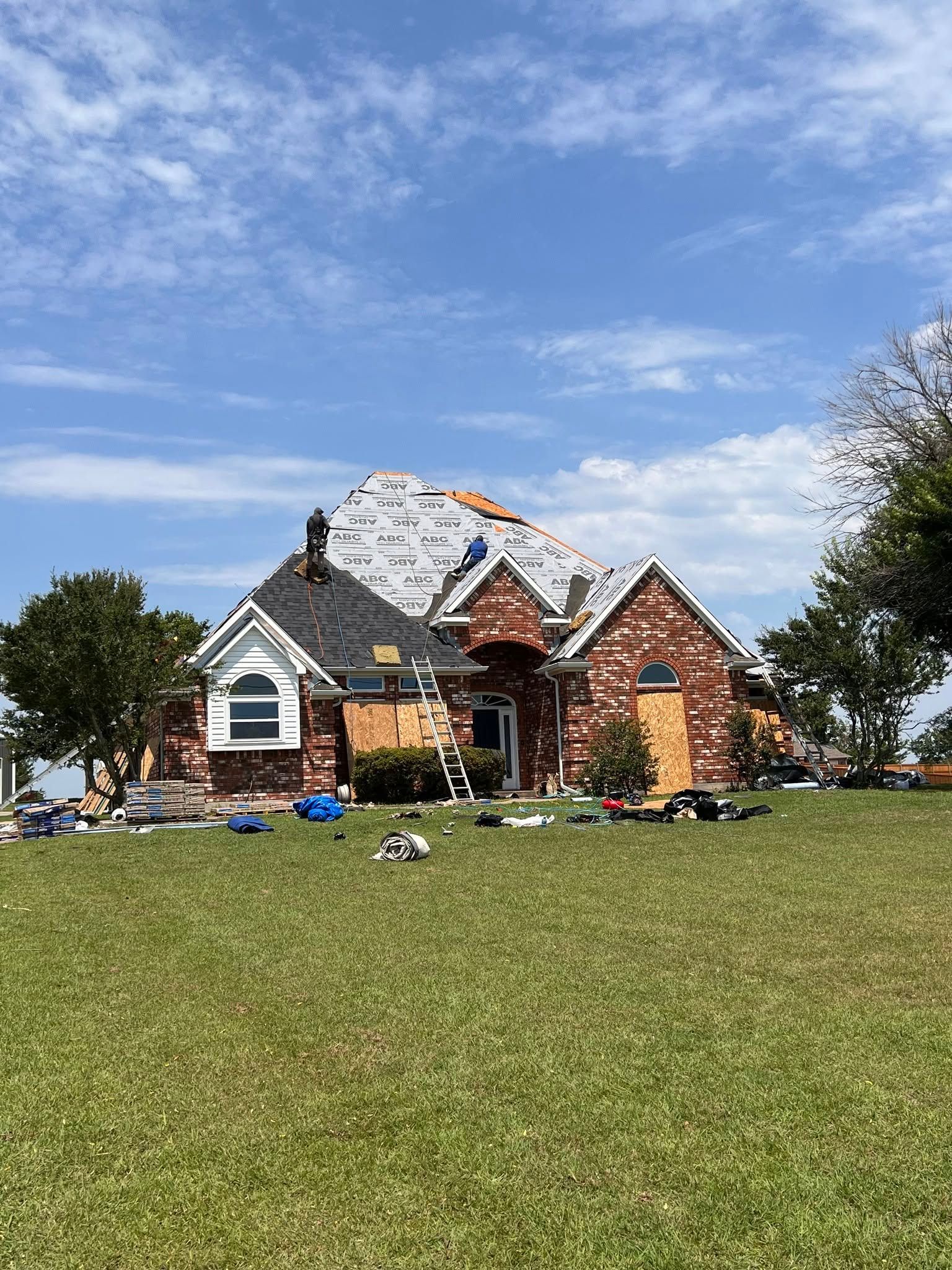
Full roof assessment begins with attic inspection, verifying deck condition from below and identifying moisture penetration, structural sag, and ventilation pathway obstructions that surface inspection misses. Old roof removal exposes the deck for direct examination and repair where rot or deterioration appears, followed by ice-and-water barrier installation at vulnerable transition points and complete underlayment coverage before new material goes down. Installation technique must match manufacturer certification requirements to preserve extended warranty coverage, with fastener placement, flashing integration, and seam overlap dimensions following specifications that separate certified installations from standard work.
After replacement finishes, all roof planes show uniform material appearance without exposed fasteners or waviness, attic temperature stays within range of outdoor conditions due to restored ventilation function, and interior spaces remain dry during rain events that previously caused ceiling stains. Complete warranty documentation separates material manufacturer coverage from Master Roofing LLC labor warranty, clarifying claim procedures and coverage duration for each protection type.
Replacement service includes complete old material removal and disposal, deck repair where deterioration appears, and new installation with manufacturer-matched technique that preserves warranty validity. It does not include attic insulation upgrades, structural framing modifications, or gutter system replacement unless those components require attention to support the new roof, and final material selection depends on storm resistance priorities, warranty expectations, and budget constraints the property owner establishes during the assessment phase.
What Property Owners Usually Ask
These questions arise frequently during roof replacement consultations and insurance claim discussions in the Dallas-Forth Worth region.
What does attic inspection reveal before replacement begins?
Attic inspection identifies roof deck condition, checking for moisture stains that indicate leak history, sagging between rafters that signals structural inadequacy, and ventilation obstructions that cause heat buildup and accelerate material deterioration. This inspection determines whether deck replacement or structural reinforcement becomes necessary before new roofing installation and provides documentation that supports insurance claims for hidden damage extending beyond visible exterior deterioration.
How does impact-rated shingle choice affect insurance premiums in the Dallas area?
Impact-rated shingles meeting Class 4 standards resist hail damage better than standard composition products, and many insurance carriers offer premium discounts ranging from 15 to 35 percent for homes with Class 4 installations in hail-prone areas. The upfront material cost increase often pays back through lower premiums within five to seven years, and the shingles provide better protection during the next storm season.
Why do warranty terms separate material coverage from labor coverage?
Material warranties cover manufacturing defects in shingle composition, metal panel integrity, or membrane bonding and typically extend 20 to 50 years depending on product grade, while labor warranties cover installation workmanship for shorter periods reflecting contractor business longevity and claim risk. The two warranty types activate through different claim procedures—material claims go to manufacturers, labor claims return to the installer—and both must remain active to provide complete protection against defects and installation failures.
What documentation supports insurance claims for hail damage replacement?
Documentation includes exterior photography showing hail impact patterns across all roof planes, attic images revealing moisture penetration or deck damage, detailed damage mapping that quantifies affected area percentage, and material age verification establishing expected remaining service life. Public adjusters use this documentation to challenge claim denials or inadequate settlement offers that don't cover full replacement cost at current material and labor rates.
When should replacement happen instead of ongoing repairs?
Replacement becomes necessary when damage affects more than 30 percent of roof surface area, when the existing roof has exceeded its expected service life and material warranties have expired, or when repair costs approach 50 percent of replacement value. Material age, damage extent, remaining warranty coverage, and future storm exposure all factor into the replacement decision, with insurance coverage availability often determining project timing for storm-damaged roofs.
Master Roofing LLC partners with public adjusters to handle complex or denied insurance claims, providing documentation depth and damage assessment detail that supports coverage approval for storm-damaged roofs. Request a damage assessment to review replacement options and insurance claim requirements specific to your property.