Installations That Handle Texas Climate
Roof Installation in Heartland for new construction and complete roof replacement projects
Installing a new roof involves material-matched techniques that account for wind uplift zones, hail impact resistance requirements, and thermal expansion rates that vary between shingle, metal, and flat membrane systems. Master Roofing LLC installs residential and commercial roofs across the Dallas-Fort Worth area, working with homeowners and property managers who need installations that meet manufacturer certification standards and preserve warranty coverage for both materials and labor. The process begins with attic and structural assessment before any material goes on the roof, identifying deck deterioration, inadequate ventilation, and framing issues that would compromise the new installation if left unaddressed.
Material choice drives installation technique—asphalt shingles require specific nailing patterns and starter strip placement, metal panels need fastener clip spacing calculated for thermal movement, and flat membranes demand seam welding procedures that meet manufacturer specifications. Each material category performs differently under the heat cycling and storm exposure common in the Dallas-Forth Worth region, and proper installation directly affects how long the roof lasts before replacement becomes necessary.
Arrange an on-site consultation to review structural requirements and material options suited to your building.
What You Notice Once Installation Is Finished
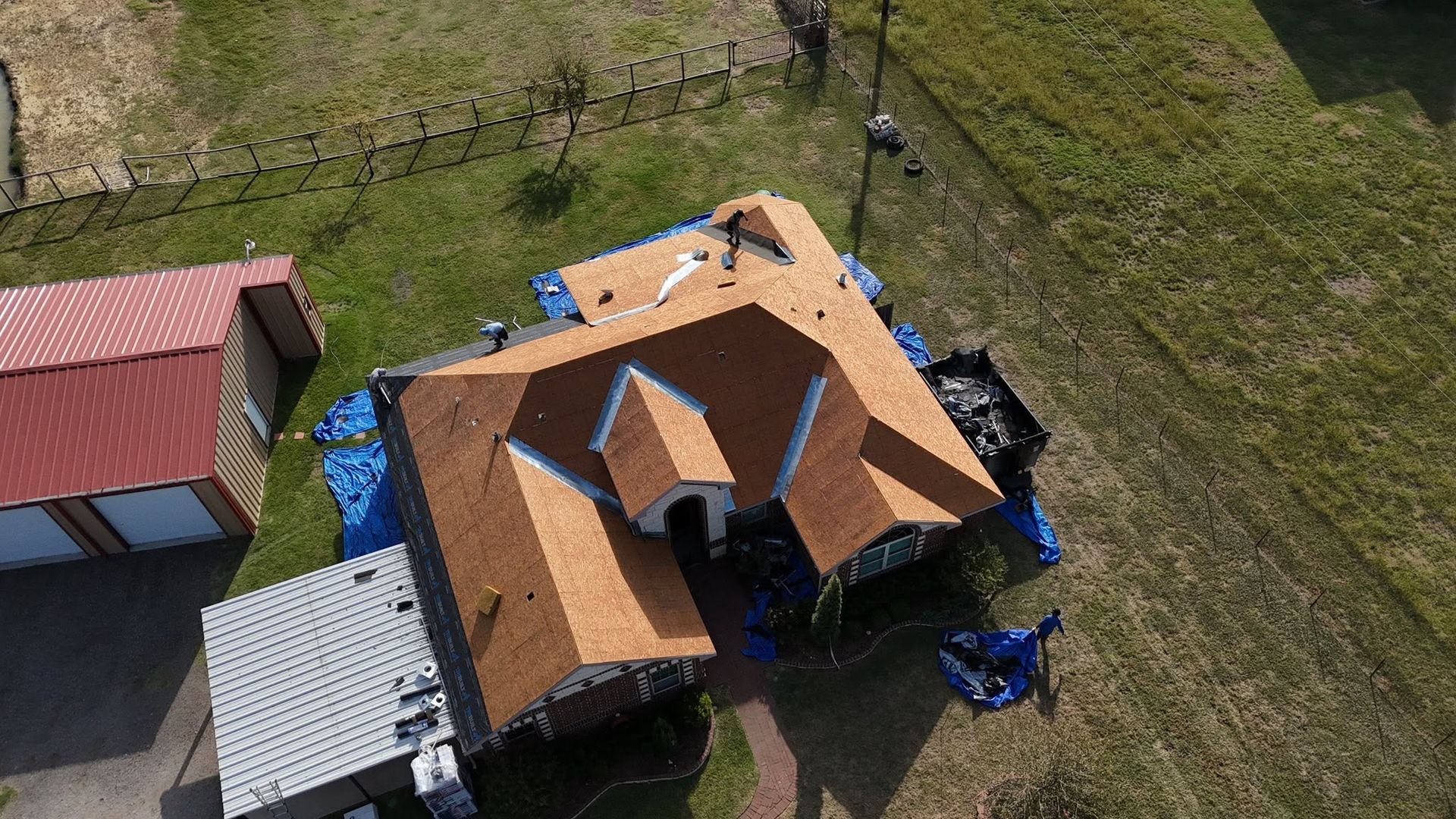
The installation sequence starts with complete removal of existing roofing material when replacement projects require it, followed by deck inspection and repair where wood shows rot or structural sag between rafters. Ice-and-water barrier goes down at eaves, valleys, and penetration points before underlayment covers the entire deck, creating a secondary moisture barrier that protects against wind-driven rain. Material installation follows manufacturer specifications for fastener placement, overlap dimensions, and flashing integration at chimneys, vents, and wall transitions.
After the work finishes, all roof planes show uniform material alignment without waviness or exposed fasteners, flashing sits flush against vertical surfaces without gaps that allow water entry, and attic temperature stays closer to outdoor ambient conditions due to properly functioning ventilation pathways. Manufacturer certification alignment means the installation qualifies for extended material warranties, and separate labor warranty documentation clarifies what Master Roofing LLC covers beyond the material manufacturer's defect protection.
Installation service includes old material disposal, deck repair where damage appears, and complete cleanup of debris from gutters and landscaping areas. It does not include attic insulation upgrades, structural framing modifications, or gutter replacement unless those components require attention to support the new roof system, and final material selection remains the property owner's decision after performance and cost trade-offs are explained.
Common Questions About This Service
Property owners preparing for new roof installation typically ask these questions during the planning phase.
What does attic assessment reveal before installation starts?
Attic assessment identifies roof deck condition from below, checking for moisture stains that indicate past leaks, sagging between rafters that signals structural inadequacy, and ventilation obstructions that cause heat buildup and shorten material lifespan. This inspection determines whether deck replacement or structural reinforcement becomes necessary before new roofing material installation.
How does manufacturer certification affect warranty coverage?
Manufacturer certification requires installers to follow specific material handling, fastener placement, and flashing integration procedures that preserve material warranty validity, often extending coverage from standard 20-year terms to 50-year periods for premium shingle products. Installations that don't follow certified procedures may void material warranties, leaving only the contractor's labor warranty in effect if defects appear.
Why does material choice matter for hail resistance in the Dallas-Forth Worth region?
Shingle impact ratings range from Class 1 to Class 4, with higher classes indicating greater resistance to hail damage—Class 4 shingles withstand two-inch hail impacts without granule loss or mat fracture, while Class 1 shingles show damage at smaller hail sizes. Metal roofing resists hail denting based on panel gauge thickness, and flat membranes vary in puncture resistance depending on reinforcement layer composition, all of which affect how the roof survives the next storm season.
What's included in the labor warranty separate from material warranty?
Labor warranties cover installation workmanship issues like improper fastener placement, flashing gaps that allow leaks, and seam failures caused by incorrect technique, typically for two to ten years depending on contractor policy. Material warranties cover manufacturing defects in shingles, metal, or membrane composition but don't address installation errors, so both warranty types must remain in effect to provide complete coverage.
When does installation require structural reinforcement beyond standard deck repair?
Structural reinforcement becomes necessary when roof framing shows inadequate load-bearing capacity for new material weight, when rafter spacing exceeds code limits for the selected material, or when wind uplift calculations indicate that existing attachment points won't hold the roof during high-wind events. Engineering assessment determines reinforcement requirements based on building age, material choice, and local wind zone classifications.
Master Roofing LLC holds GAF Master Elite and Owens Corning Preferred certifications, ensuring installations meet manufacturer standards that preserve extended warranty coverage. Schedule a property assessment to discuss material options and installation requirements for your project.