Roofs Built for Business Continuity
Commercial Roofing Services in Dallas for multi-unit and commercial properties facing wind and hail exposure
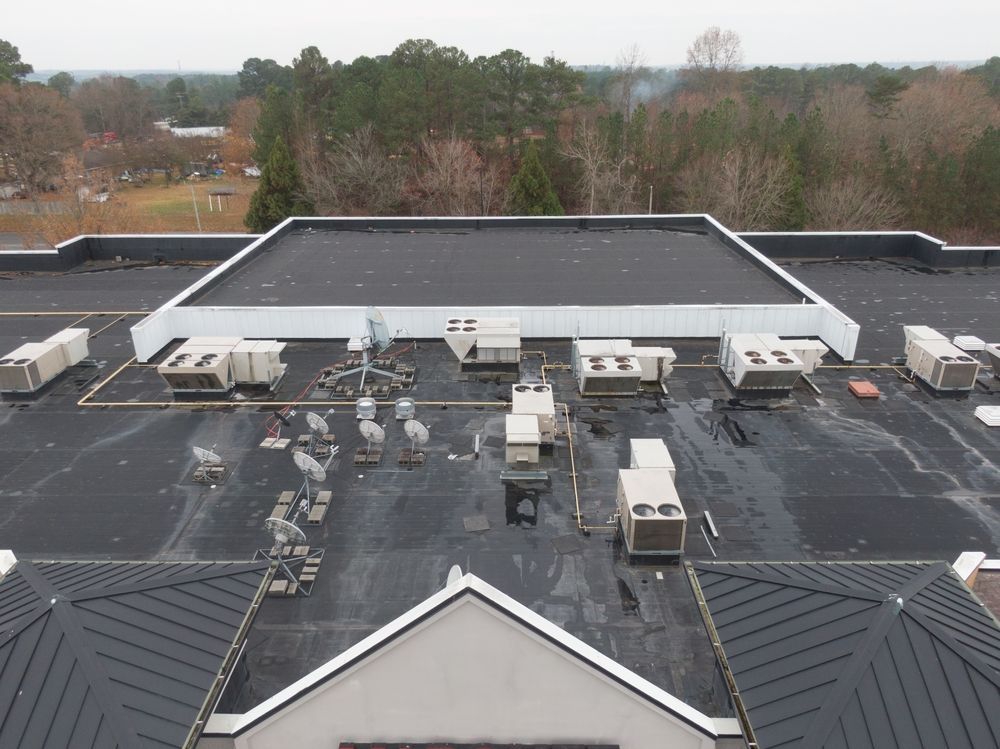
Low-slope flat roofs and metal panel systems dominate commercial building stock across the Dallas-Fort Worth area, where seasonal hail and wind damage can shut down operations if water penetrates interior spaces or structural integrity becomes compromised. Master Roofing LLC installs, repairs, and replaces commercial roofs in Heartland, Irving, Plano, Fort Worth, and surrounding areas, addressing the material-specific challenges of flat membrane systems that pond water and metal roofs that expand and contract with temperature swings. When storm damage occurs, the insurance claim process becomes critical—business interruption costs escalate quickly, and claim documentation quality determines whether coverage approves or denies, affecting how fast the building returns to full operation.
Commercial roof work differs from residential in scale, access logistics, material thickness requirements, and the structural assessment depth needed to verify that decking and support systems can handle new material weight and wind uplift forces. Flat roof installations require slope verification and drain placement that prevents ponding, while metal roof systems need expansion joint spacing calculated for thermal movement in Texas summer heat.
Request a site evaluation to assess current roof condition and discuss material options suited to your building use.
What Proper Residential Roofing Requires
Low-slope flat roofs and metal panel systems dominate commercial building stock across the Dallas-Fort Worth area, where seasonal hail and wind damage can shut down operations if water penetrates interior spaces or structural integrity becomes compromised. Master Roofing LLC installs, repairs, and replaces commercial roofs in Dallas, addressing the material-specific challenges of flat membrane systems that pond water and metal roofs that expand and contract with temperature swings. When storm damage occurs, the insurance claim process becomes critical—business interruption costs escalate quickly, and claim documentation quality determines whether coverage approves or denies, affecting how fast the building returns to full operation.
Commercial roof work differs from residential in scale, access logistics, material thickness requirements, and the structural assessment depth needed to verify that decking and support systems can handle new material weight and wind uplift forces. Flat roof installations require slope verification and drain placement that prevents ponding, while metal roof systems need expansion joint spacing calculated for thermal movement in Texas summer heat.
Request a site evaluation to assess current roof condition and discuss material options suited to your building use.
Answers to Frequent Service Questions
Commercial property owners in Heartland and the DFW area typically ask these questions when evaluating roof replacement or storm damage repair.
What does structural assessment include before commercial roof installation?
Structural assessment verifies roof deck integrity, examines support beam and joist condition, checks parapet wall stability, and calculates whether existing framing can support new material weight and wind uplift forces without reinforcement. This step prevents installation failures caused by underlying structural inadequacy and identifies necessary repairs before new roofing material goes down.
How do flat roof slope requirements prevent ponding in the Dallas-Forth Worth region?
Flat roofs require minimum quarter-inch-per-foot slope toward drains and scuppers to move water off the surface within 48 hours of rainfall, preventing ponding that degrades membrane adhesion and accelerates material deterioration. Slope verification during installation ensures drainage pathways function correctly and that low spots don't collect standing water after storms.
Why does insurance claim documentation require public adjuster coordination?
Insurance adjusters often underestimate commercial roof damage extent or dispute whether hail impact caused membrane deterioration versus normal wear, leading to claim denials or settlement offers that don't cover full replacement cost. Public adjusters provide independent damage assessment, document hidden structural damage, and negotiate with insurance carriers to secure coverage that matches actual repair or replacement costs.
What's the difference between TPO and EPDM membrane for commercial flat roofs?
TPO membranes use heat-welded seams that create permanent bonds and resist puncture better than adhesive-joined systems, while EPDM offers superior UV resistance and flexibility in cold weather but relies on adhesive or tape seams that require more frequent maintenance. Both materials handle Texas heat, but seam integrity and maintenance requirements differ significantly between the two options.
When should commercial roof replacement happen instead of repair?
Replacement becomes necessary when membrane damage covers more than 40 percent of the roof surface, when multiple leak sources indicate systemic failure, or when the roof has exceeded its expected service life and ongoing repairs only postpone inevitable replacement. Material age, damage extent, and business interruption risk all influence the replacement decision for commercial properties.
Master Roofing LLC partners with public adjusters to handle complex or denied insurance claims, providing the documentation depth and damage assessment detail that supports coverage approval. Schedule a site inspection to review damage and material options for your commercial property.